An exceptional witness to Palaeolithic art in the Paris Basin
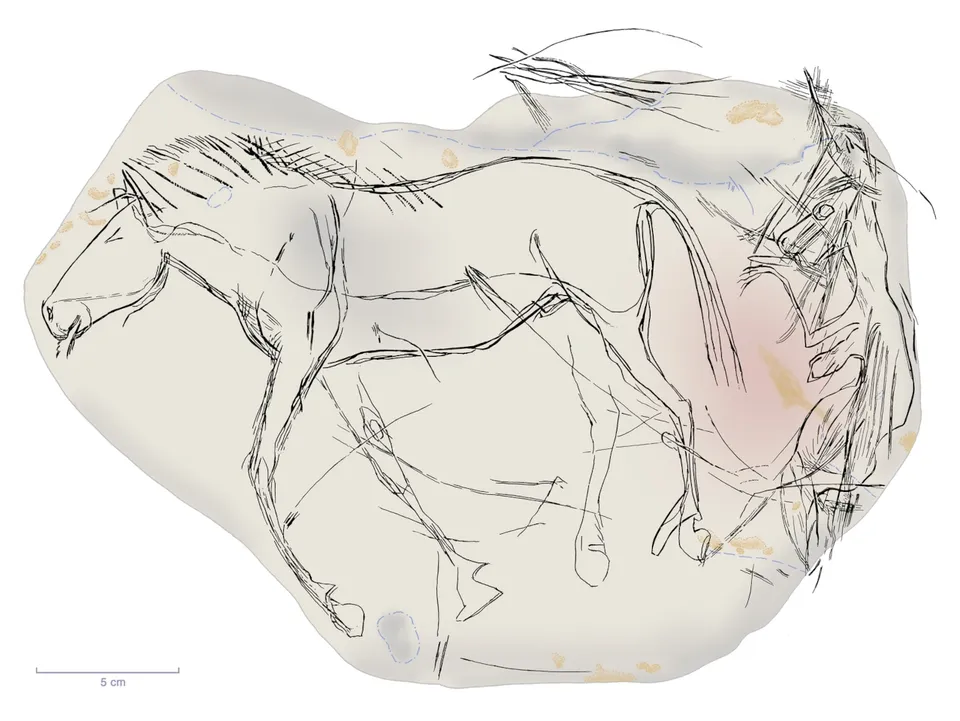
The engraved pebble of Étiolles is one of the rare works of Palaeolithic art discovered in the Paris Basin. Unearthed at the Magdalenian site of Étiolles, in the Essonne department, this limestone block was worked by prehistoric people around 15,000 years ago.
It is a first-rate archaeological document for understanding the symbolic practices of the Magdalenian.
Drawing tracing the engravings of the Étiolles pebble © Carole Fritz, Gilles Tosello
Engravings as fine as a hair, invisible to the naked eye
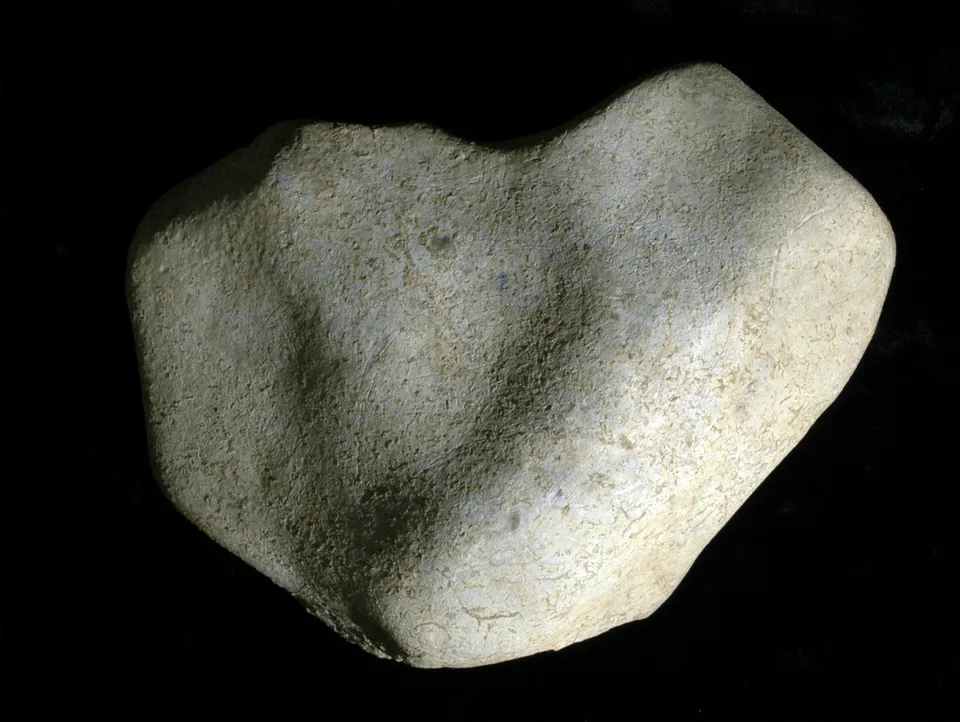
The pebble was placed beneath a slab bordering a domestic hearth, in one of the Étiolles campsites. The incisions, made with a flint tool, are extremely fine: as thin as a hair and less than a millimetre deep. Although remarkably well preserved, the engraving remains barely legible to the naked eye, which makes it difficult for a museum visitor to read.
Photograph of the engraved pebble of Étiolles © Carole Fritz, Gilles Tosello
Interactive presentation of the pebble
Revealing the hidden details
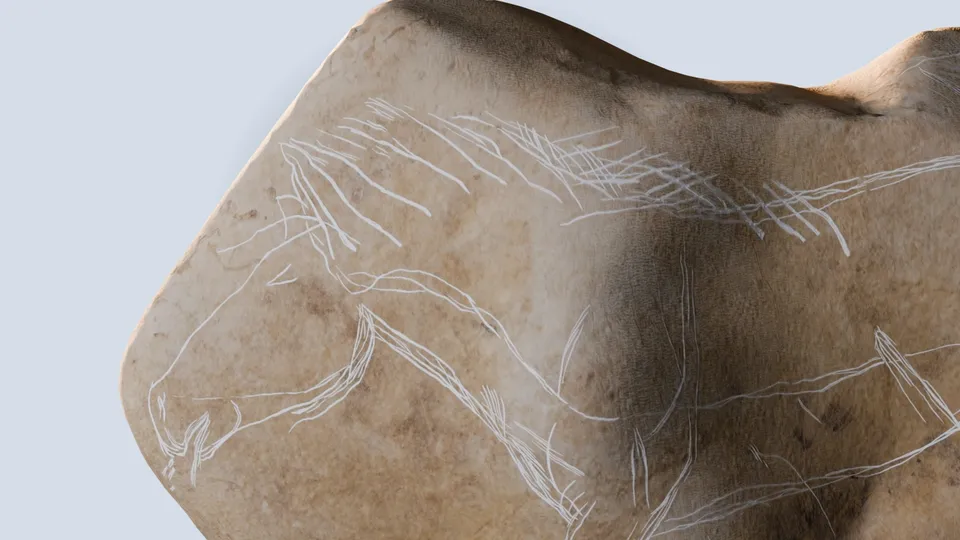
Thanks to a high-resolution survey, every incision — even the most discreet — can be revealed, brought to light and explored in detail.
This model is published on eCorpus, the open-source platform for managing and showcasing 3D corpora, developed by Holusion, the University of Lille and the University of Liège. Documented and annotated, the pebble becomes both a mediation tool for the general public and a research resource for archaeologists.
Sources
Étiolles, Palaeolithic campsites — French Ministry of Culture
Île-de-France Prehistory Museum, Nemours
B. Valentin et al., "Un témoin privilégié de l'art paléolithique dans le Bassin parisien : le galet gravé d'Étiolles (Essonne)", Bulletin de la Société préhistorique française, 2011.